
Geospatial AI and distributed aerial sensing
EC-WAMI — event cameras for wide-area motion imagery
Using event-camera data to stabilize camera pose estimation in wide-area aerial imagery.
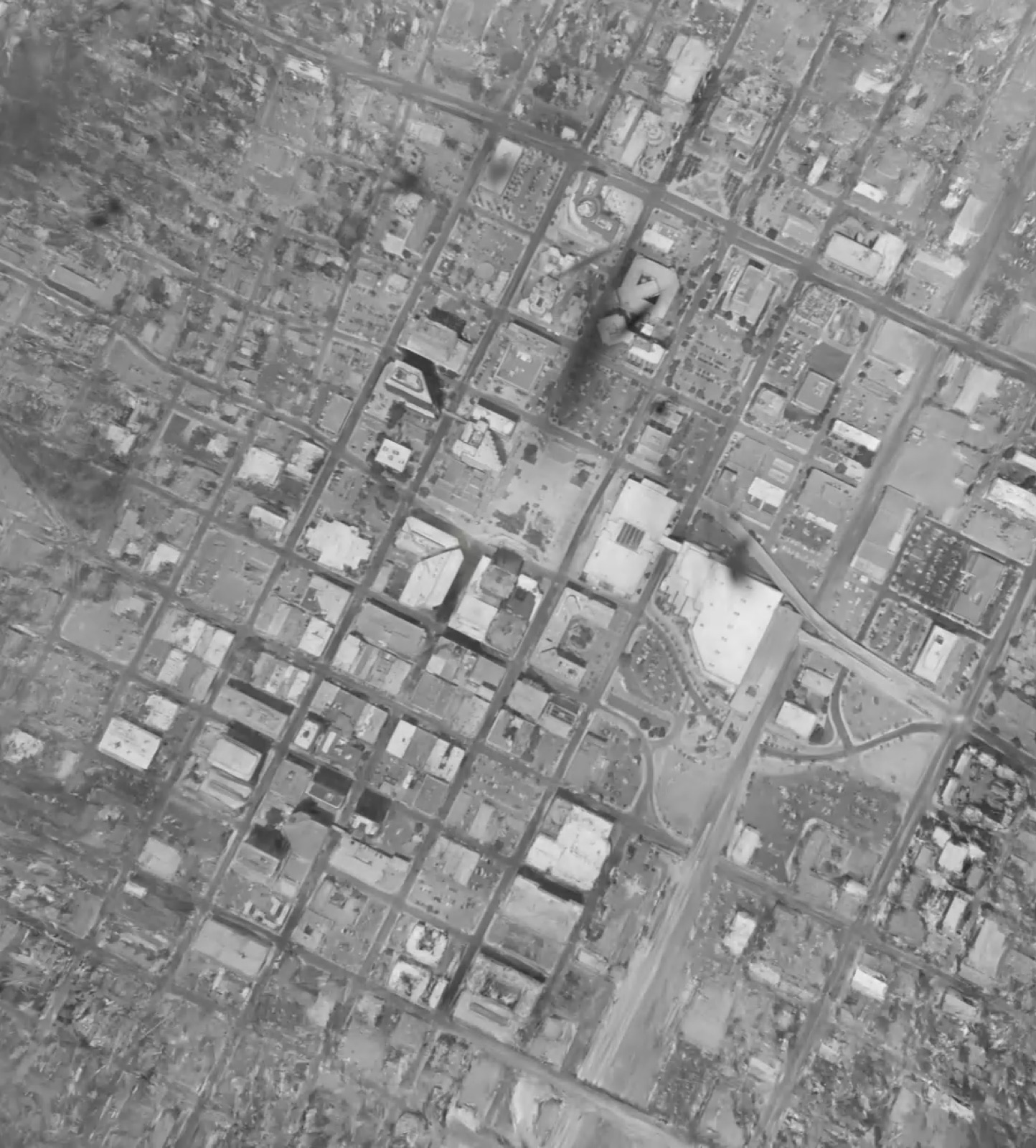
Wide-area motion imagery (WAMI) keeps a large area under continuous observation from the air, and is used for urban planning, disaster response, and security. RGB cameras have been the standard sensor for it, and they struggle in exactly the conditions the task imposes: motion blur from the platform, limited resolution over a wide swath, and a dynamic range too narrow for scenes that mix shadow and glare. Accurate camera poses are what make stable mosaics and 3D models possible, so degraded frames undermine the whole product.
EC-WAMI is the first use of event cameras for camera pose optimization in WAMI. Event cameras report per-pixel brightness changes asynchronously, with very high temporal resolution, high dynamic range, and low power draw — properties that survive the motion and lighting that blur conventional frames.
Datasets
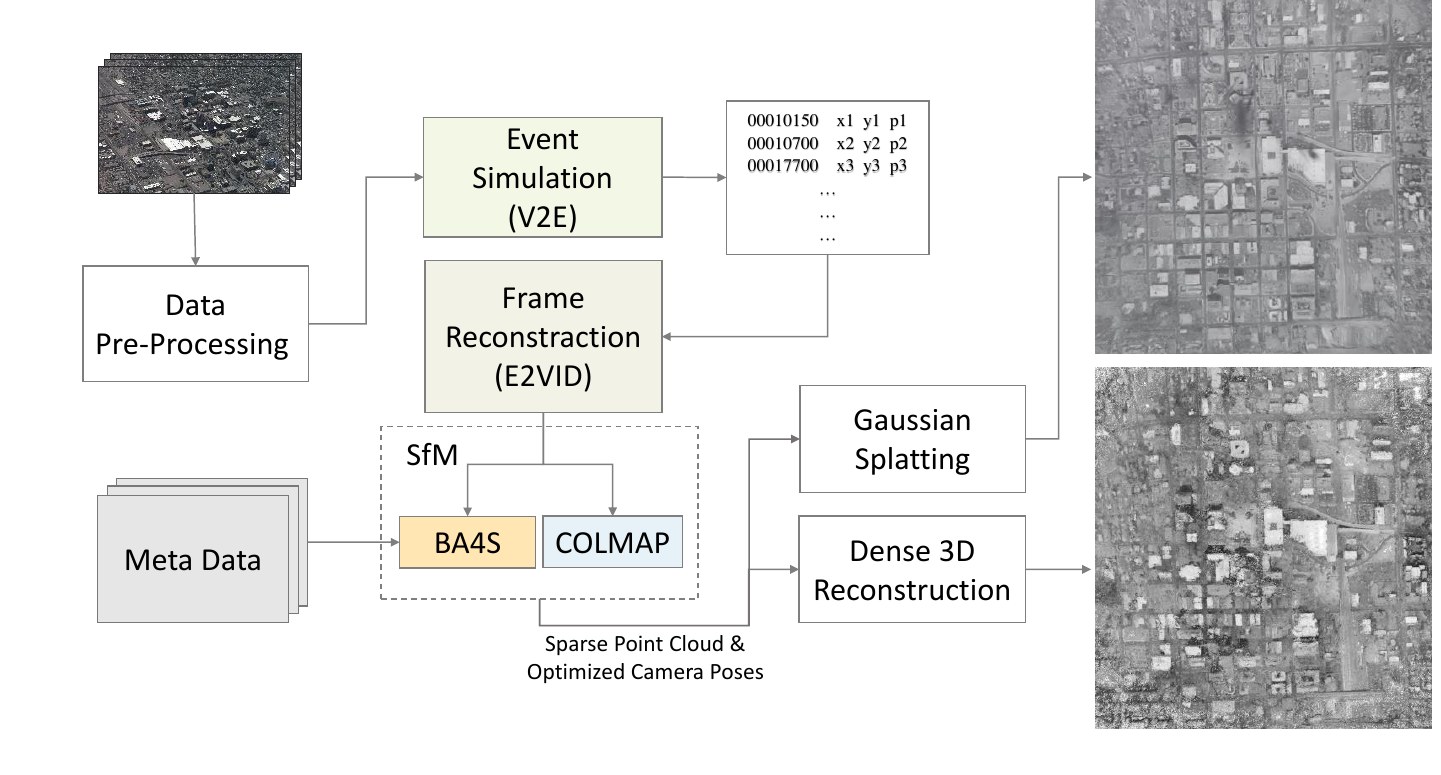
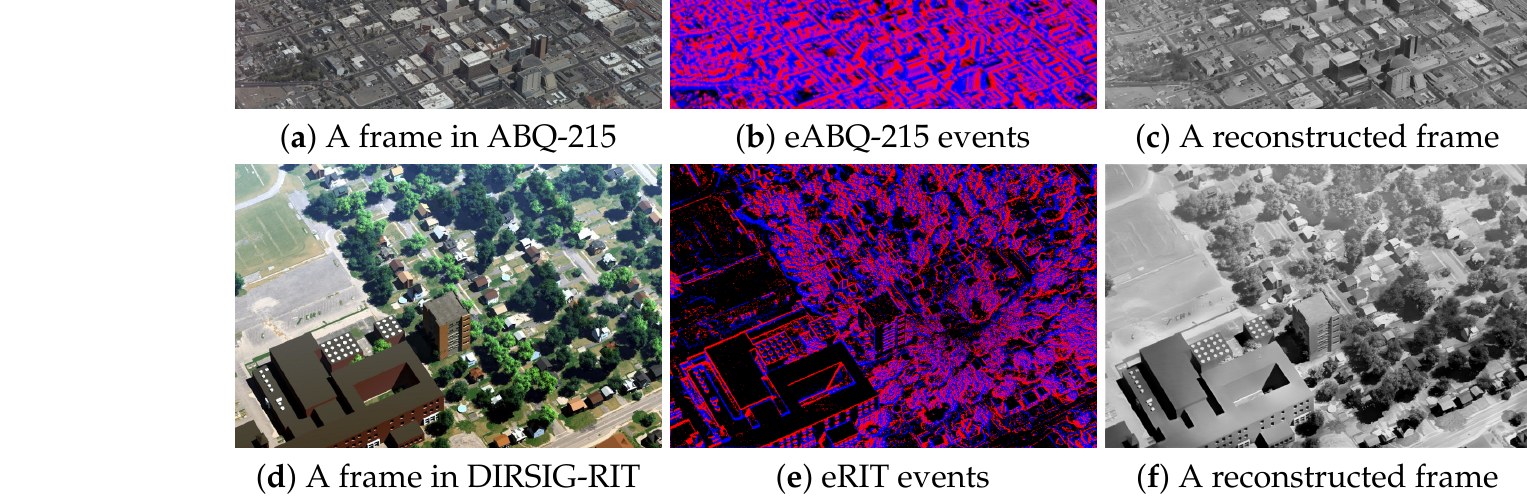
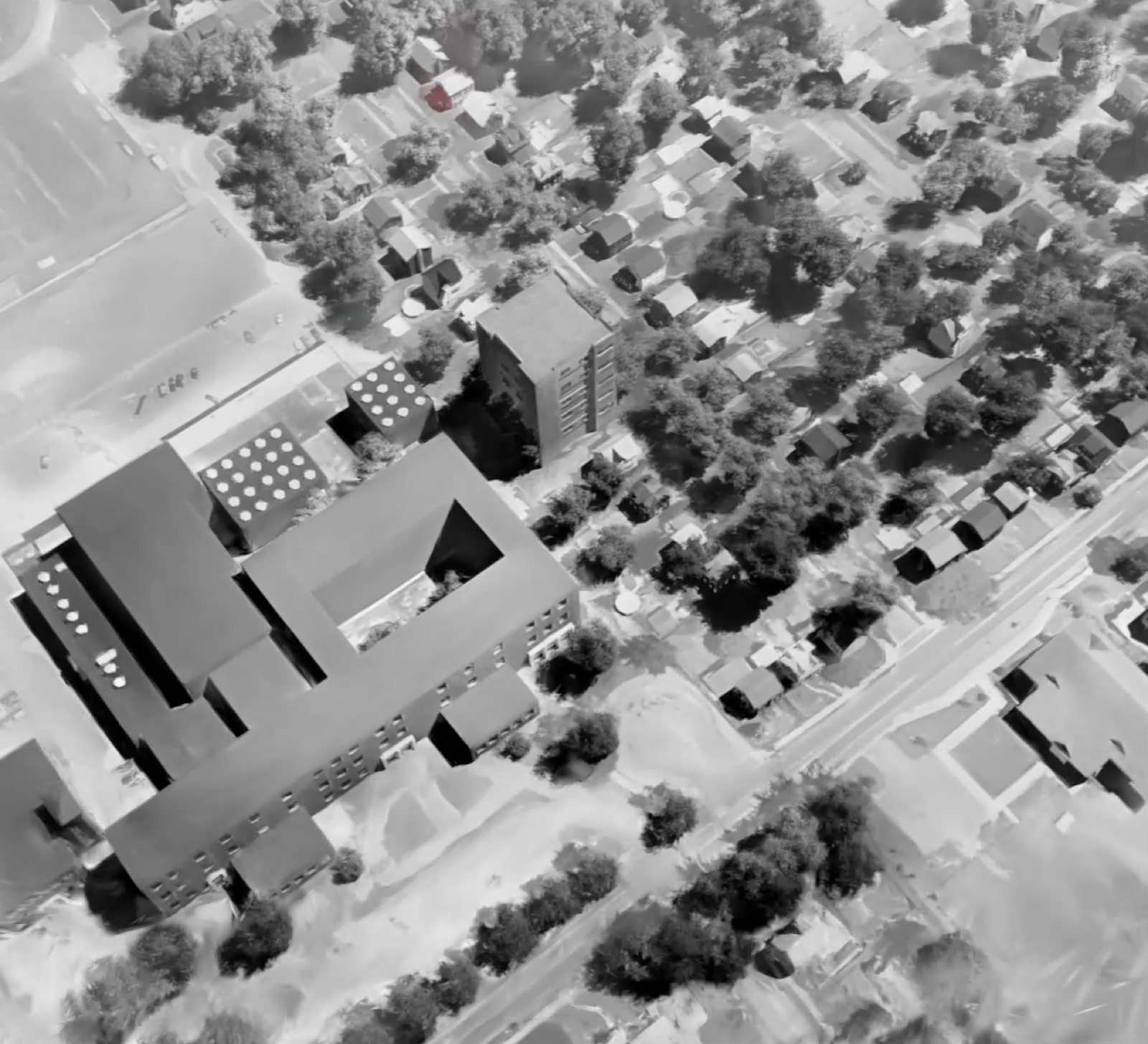
Real aerial imagery captured under the adverse conditions the method targets was not available, so the degraded cases were produced by applying systematic perturbations to clean frames. Event streams are simulated from RGB imagery with an event simulator, frames are then reconstructed from the event streams alone, and structure-from-motion and dense 3D reconstruction run on those. Two datasets were built this way: eABQ, from real imagery of Albuquerque, and eRIT, synthetic.
Publication
I. Nkrumah, M. Moshrefizadeh, O. Tahri, E. Blasch, K. Palaniappan, and H. Ali Akbarpour. EC-WAMI: Event Camera-Based Pose Optimization in Wide Area Motion Imagery. Sensors, 24(23):7493, 2024. Paper